It was a typical morning on a commercial construction project. Crews were scheduled, materials were in place, and timelines were already tight.
Then everything changed.
Several pieces of heavy equipment—gone overnight. No forced entry. No witnesses. Just missing assets and a growing list of delays.
What followed wasn’t just financial loss. It disrupted timelines, operational setbacks, and mounting pressure across the entire project.
Scenarios like this are not uncommon. Across active construction zones—including large-scale developments throughout Texas—these incidents happen more often than most teams expect.
And in many cases, the root cause is the same:
Surveillance was treated as an afterthought, not a system designed from day one.
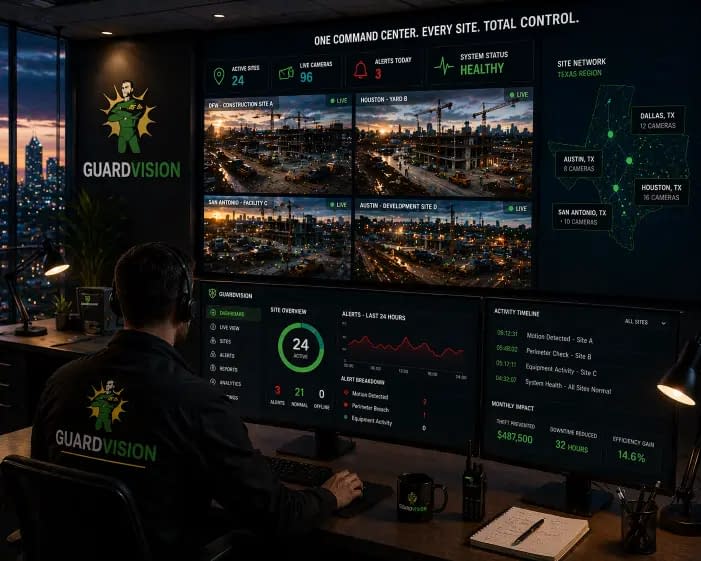
This guide breaks down what effective construction site surveillance really looks like—and how modern solutions from providers like Guardvision are helping teams stay ahead of risk.
Why Construction Sites Are High-Risk Environments
Construction sites are inherently difficult to secure.
They are:
- Temporary and constantly changing
- Open with multiple access points
- Filled with high-value equipment and materials
- Often unattended for long hours
This combination creates the perfect environment for:
- Equipment theft
- Unauthorized access
- Vandalism
- Safety incidents
Across fast-growing project environments—such as those seen throughout Texas—these risks can quickly escalate into significant financial and operational setbacks.
Beyond theft, there’s also the human factor. Construction remains one of the most hazardous industries, where lack of visibility often leads to preventable accidents.
And when incidents occur, the absence of documented footage can turn a simple situation into a complex legal challenge.
Modern Surveillance Technologies: What’s Available Today
The good news is—construction surveillance has evolved significantly.
Today’s systems are no longer limited to basic CCTV. They are multi-layered, intelligent ecosystems designed for both monitoring and prevention.
Key technologies include:
Fixed IP Cameras
High-resolution cameras for continuous monitoring of key zones.
PTZ (Pan-Tilt-Zoom) Cameras
Flexible cameras that can track movement and cover wide areas.
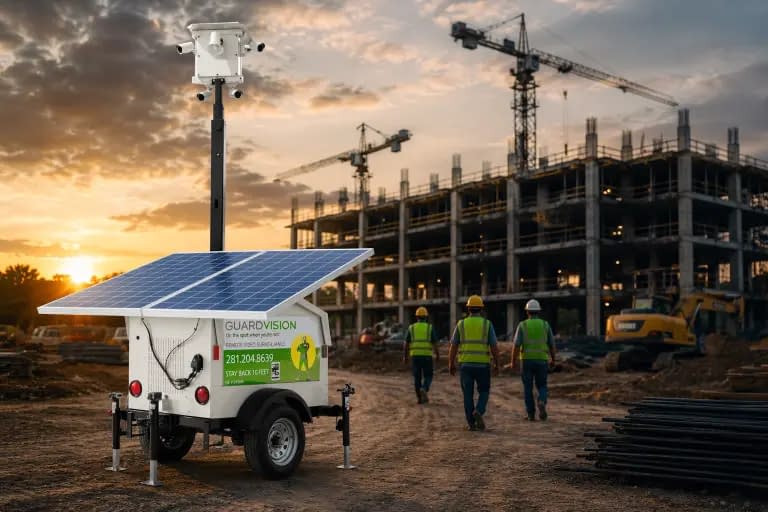
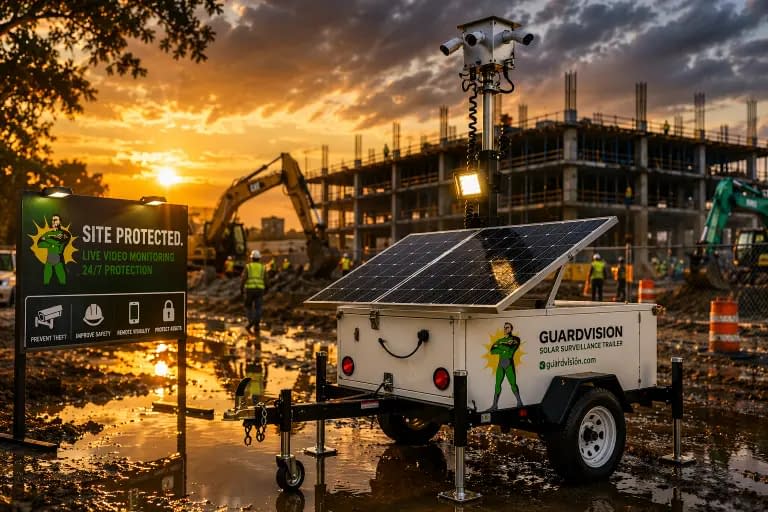
Mobile & Solar Surveillance Units
Portable, self-powered systems ideal for dynamic construction environments.
Thermal & Night Vision Cameras
Designed for low-light or no-light conditions, ensuring 24/7 coverage.
Access Control Systems
Track who enters and exits the site, adding an extra layer of accountability.
AI-Powered Analytics
Detects unusual behavior, unauthorized access, and safety risks in real time.
Solutions implemented by Guardvision across diverse environments combine these technologies to create smarter, more responsive site security systems.
How to Choose the Right Surveillance System
Selecting the right system isn’t about buying the most expensive equipment—it’s about choosing what fits your site.
Start with a risk assessment:
- Where are your vulnerable areas?
- Where are materials stored?
- Which zones are hardest to monitor?
Then consider:
Connectivity
Most construction sites lack stable internet—cellular-based systems are often the best solution.
Storage & Access
Who needs access to footage? For how long should it be stored?
Scalability
Your site will evolve—your surveillance system should adapt with it.
After-Hours Coverage
Most incidents happen at night—low-light performance is critical.
Software Platform
A clean, user-friendly dashboard with remote access is essential for real-time control.
Across large-scale projects—including those throughout Texas—these considerations are becoming standard practice for effective site security planning.
Deployment: Turning Strategy into Action
Even the best equipment fails if deployed incorrectly.
Effective surveillance depends on how well it’s implemented.
Smart Camera Placement
- Cover all entry points
- Eliminate blind spots
- Use multiple angles for critical zones
Clear Monitoring Strategy
- Passive recording
- Live monitoring
- Automated alerts
- Or a combination of all
Integration with Security Systems
Surveillance should work alongside:
- Fencing
- Lighting
- Access control
- On-site personnel
Team Training
Everyone should know:
- Surveillance is active
- How to respond to incidents
- Who to contact
Guardvision deployments often emphasize this integration—ensuring surveillance is not just installed, but actively used.
The Real ROI: More Than Just Security
Many teams view surveillance as a cost.
In reality, it’s a high-impact investment.
Theft Prevention
Visible surveillance reduces incidents significantly.
Safety Improvement
Helps identify unsafe behavior before accidents happen.
Liability Protection
Provides documented evidence for disputes and claims.
Operational Visibility
Managers can monitor site activity remotely.
Insurance Benefits
Better security often leads to reduced premiums.
Across high-value construction environments like Texas, these benefits quickly outweigh the initial investment.
Visibility Is Control
Construction site surveillance is no longer optional—it’s essential.
Modern systems offer:
- Real-time visibility
- Proactive risk detection
- Scalable protection
- Operational efficiency
With advanced solutions from Guardvision, businesses can move beyond reactive security and build systems designed for modern construction challenges.
Because at the end of the day, it’s simple:
If you can see what’s happening on your site, you can control it.
And in construction, that control protects everything—from assets to timelines to reputation.