It was late on a Friday night when the call came in.
A subcontractor had left a section of the site unsecured. By the time anyone realized, an unauthorized individual had entered—and an incident had already occurred. No cameras. No alerts. No visibility.
What followed wasn’t just a minor issue. It became a cascade of delays, legal complications, and operational setbacks that took months to resolve.
Situations like this are not rare. Across large-scale construction environments—including rapidly expanding project zones throughout Texas—these risks are part of daily reality.
And in most cases, the root problem is the same:
A lack of real-time visibility when it matters most.
That’s why remote construction site monitoring has evolved from a “nice-to-have” into a critical part of modern project management—and why companies are increasingly turning to integrated solutions from providers like Guardvision.
What Remote Monitoring Really Means on a Construction Site
Remote monitoring goes far beyond simply installing cameras.
It is the ability to observe, analyze, and respond to site activity in real time—without being physically present.
A fully implemented system provides:
- Security Monitoring – Tracking who enters the site and when
- Safety Oversight – Ensuring compliance with safety protocols
- Progress Tracking – Documenting construction milestones
- Environmental Monitoring – Measuring conditions like temperature and air quality
- Asset Tracking – Monitoring equipment and materials
- Workforce Visibility – Verifying on-site activity and productivity
When combined, these capabilities transform remote monitoring into more than security—it becomes a complete operational control system.
Why Traditional Site Oversight Is No Longer Enough
For decades, construction oversight relied on physical presence—site managers, supervisors, and routine walkthroughs.
But today’s projects are more complex than ever:
- Multiple subcontractors working simultaneously
- Large, multi-zone job sites
- Irregular schedules and after-hours vulnerability
- Increasing client expectations for transparency
Across major construction environments—such as those seen throughout Texas—manual oversight alone simply cannot keep up.
The biggest gaps appear after hours, when most theft and incidents occur.
Remote monitoring doesn’t replace human supervision—
It extends it, strengthens it, and makes it continuous.
The Technology Behind Effective Remote Monitoring
Modern remote monitoring is built on a layered technology ecosystem, not a single tool.
High-Definition IP Cameras
Provide continuous, high-quality visual coverage across key areas.
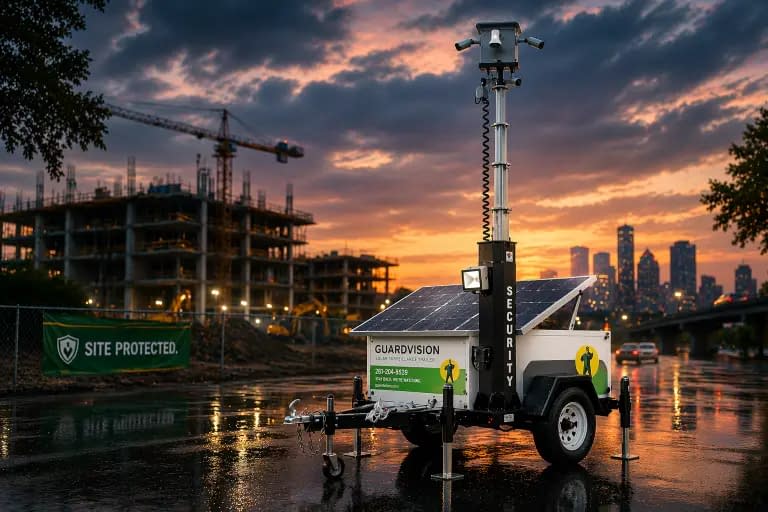
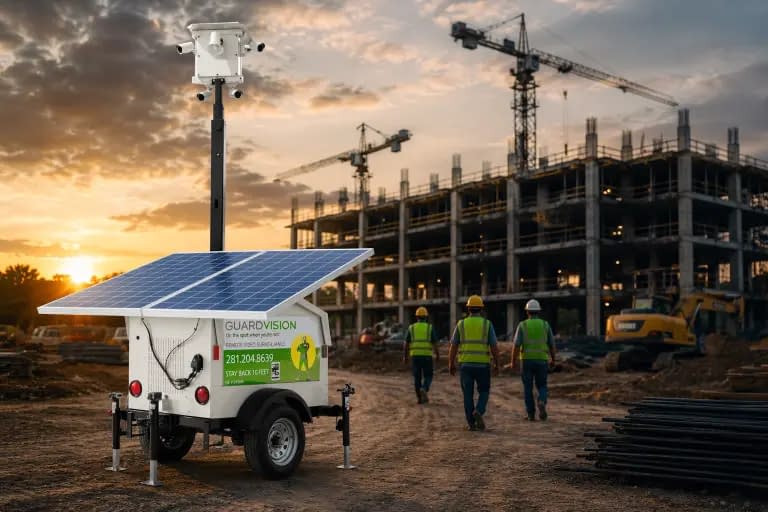
Solar-Powered Mobile Camera Units
Self-contained, flexible systems ideal for sites without power or infrastructure—widely used in dynamic construction environments across Texas.
360° and PTZ Cameras
Enable wide coverage and remote control for tracking activity in real time.
IoT Sensors and Environmental Monitoring
Track conditions that cameras can’t detect—such as air quality, vibration, and temperature.
AI-Powered Video Analytics
Automatically detects:
- Unauthorized access
- Safety violations
- Suspicious behavior
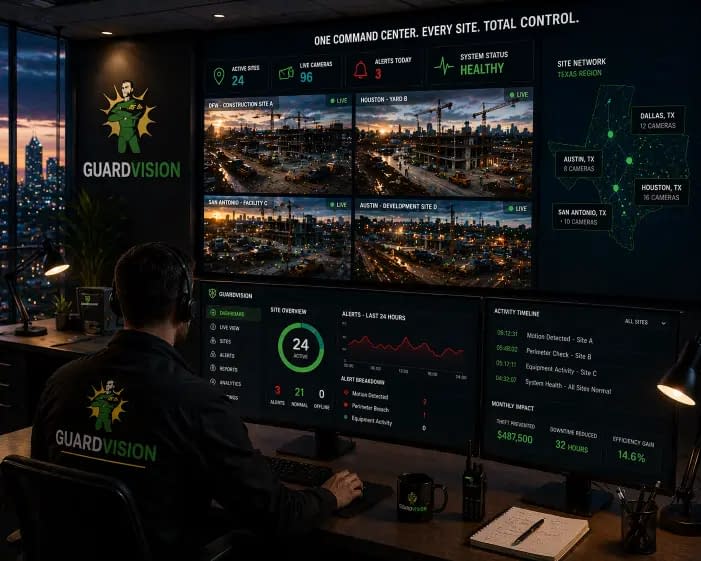
Centralized Monitoring Platforms
Bring all data into one interface—accessible anytime, from anywhere.
Solutions deployed by Guardvision integrate these technologies to create intelligent, responsive monitoring systems tailored for modern construction needs.
Deployment: What Actually Works on Real Projects
Even the best technology fails without proper implementation.
Successful deployments follow key principles:
Start with Risk Assessment
Identify critical zones—entry points, storage areas, high-risk locations.
Plan Connectivity First
Ensure reliable data transmission (often via cellular networks).
Layer Your Coverage
Combine cameras, sensors, and alerts to eliminate blind spots.
Define Response Protocols
Know exactly what happens when an alert is triggered—and who responds.
Use Data Proactively
Review footage daily, monitor trends, and improve operations continuously.
Adapt as the Site Evolves
Construction sites change—your monitoring system should too.
Across large-scale projects, including those throughout Texas, these practices are becoming standard for effective site management.
The Business Case: Cost vs. Real Value
Many organizations hesitate due to cost—but the return on investment is significant.
Theft Prevention
Visible monitoring reduces incidents dramatically.
Insurance Benefits
Lower risk often leads to reduced premiums.
Safety Improvement
Prevents costly workplace accidents.
Liability Protection
Provides evidence for claims and disputes.
Operational Efficiency
Improves project visibility and decision-making.
When all factors are considered, remote monitoring is not just a cost—
It’s a high-impact investment in project performance.
The View Forward: Visibility Is Control
Construction has always rewarded those who solve problems before they happen.
Remote monitoring does exactly that.
It allows teams to:
- Detect risks early
- Respond faster
- Maintain control from anywhere
- Build trust with stakeholders
The companies getting the most value are not necessarily those with the biggest budgets—
They are the ones who implement monitoring strategically and integrate it into daily operations.
With advanced solutions from Guardvision, businesses can move beyond reactive site management and build systems designed for modern construction challenges—across Texas and far beyond.
Because at the end of the day:
When you can see your site in real time, you can control it.
And in construction, that visibility protects everything—from safety to timelines to profitability.